The Māori language petition
Te petihana reo Māori
- When
- 14 September 1972
- Where
- Parliament, Wellington · Te Whanganui-a-Tara
- Reach
- Nationwide
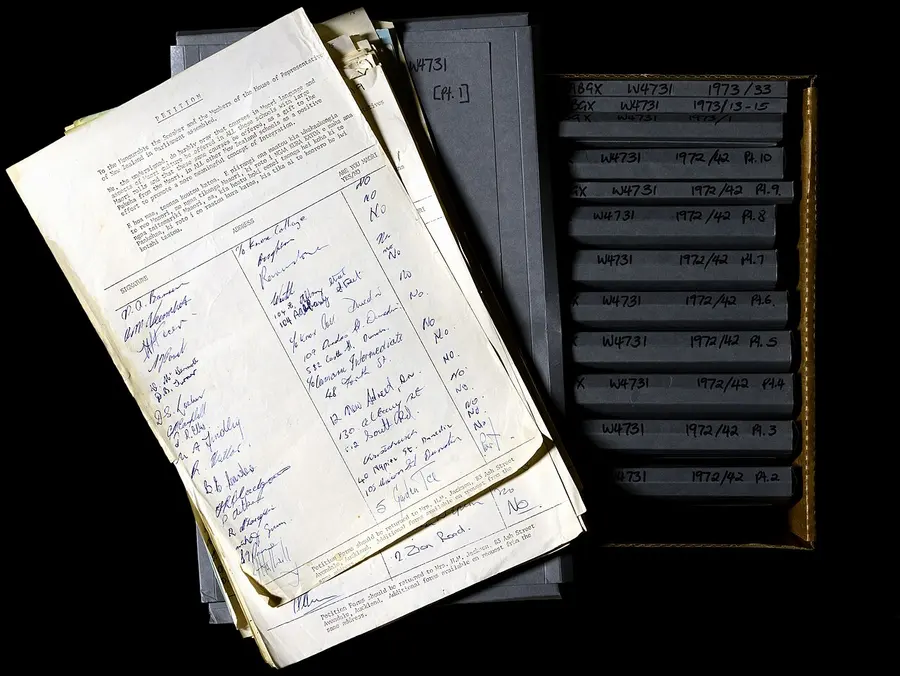
Ngā Tamatoa and Te Reo Māori Society delivered a 30,000-signature petition asking for te reo to be taught in schools. The date is now Māori Language Day.
At the beginning of the 19th century Māori was the predominant language spoken in Aotearoa, but Pākehā were in the majority by the early 1860s and English became the dominant language of the country. At the start of the 20th century most Māori still spoke just Māori, but there was an increasing shift to bilingualism, with te reo spoken at home and on the marae and English at school and in dealings with the government and employers. The language was suppressed in schools, formally or informally, and children were sometimes punished for speaking it. In 1930 the director of education, T. B. Strong, said that 'the natural abandonment of the native tongue inflicts no loss on the Maori'. After the Second World War Māori moved to the towns and cities in large numbers: NZHistory puts about 75 per cent of Māori in rural areas before the war, and about 60 per cent in urban centres two decades later. English was the language of urban New Zealand, and the number of Māori speakers began to decline rapidly.
From the 1970s many Māori reasserted their identity as Māori, and the language was central to it. Universities became one of the places where this happened. More Māori students who had grown up speaking only English enrolled there, and for many of them university became the place to learn their language and culture. Ngā Tamatoa at the University of Auckland and the Te Reo Māori Society at Victoria University of Wellington embodied this growing politicisation. Together with Te Huinga Rangatahi, the New Zealand Māori Students' Association, they organised a petition calling for the government to offer Māori language in schools. It gathered more than 30,000 signatures from across the country. On 14 September 1972 the petition was delivered to Parliament with the support of many kaumātua; a photograph of the occasion shows the group led by the kaumātua Te Ouenuku Rene (Ngāti Toa). Hana Te Hemara Jackson (Te Āti Awa and Ngāti Raukawa) of Ngā Tamatoa, one of the organisers, presented it. In the submission that went with it, she called speaking Māori the truest expression of Māoritanga and 'our link with our tipuna'.
To mark the event, 14 September was declared Māori Language Day, and in 1975 it was expanded to Māori Language Week. Following the petition, Māori was offered as a subject in some secondary schools, but with limitations: it was usually taught for four hours a week, with a focus on grammar and written Māori. New Zealand's first officially bilingual school opened at Rūātoki in 1978. Richard Benton's survey of the Māori language in the mid- to late 1970s highlighted how perilous its state was. At one of a series of meetings of elders at Waiwhetū marae in Lower Hutt, a decision was made that for the language to survive, learning needed to start from birth, and the first kōhanga reo, Pukeatua in Wainuiomata, was set up in 1982. Kura kaupapa, Māori-language immersion schools, were developed for kōhanga graduates; the first, Te Kura Kaupapa Māori o Hoani Waititi in West Auckland, is generally credited as opening in 1985. In 1984 Ngā Kaiwhakapūmau i te Reo, the Wellington Māori Language Board, lodged a claim with the Waitangi Tribunal seeking official status for the language. In 1986 the tribunal recommended that te reo be acknowledged as a taonga under Article II of the Treaty of Waitangi and recognised as an official language. The Māori Language Act 1987 made Māori an official language and set up the Māori Language Commission.
In the reading of Rawinia Higgins and Basil Keane on Te Ara, the petition's organisers belonged to the Māori renaissance of the 1970s and 1980s, in which university graduates fought to reverse language loss and change attitudes towards te reo. Māori Language Week remains a feature of the New Zealand calendar. NZHistory's history of the language judges that its decline has only just been arrested. To remain viable, it says, te reo needs a critical mass of fluent speakers of all ages and the respect and support of the wider community. Figures NZHistory cites for 2018 show that 17.9 per cent of Māori aged 15 and over could speak te reo very well or fairly well.
The defining moments of New Zealand, on one poster. Get your digital print for $25
Regions affected
Sources
Written for this project from these references rather than copied from them. Follow a link to read the full account, or to check this one against the original.
- Te taenga mai o te petihana reo Māori — arrival of the Māori language petition
- History of the Māori language
- Te reo Māori – the Māori language – Language decline, 1900 to 1970s
- Te reo Māori – the Māori language – Revitalising te reo, 1970s and 1980s
- Te reo Māori – the Māori language – Ongoing work, 1980s to 2000s
- Kura Kaupapa Māori
Related
Ngā Tamatoa formed
A group of young urban Māori activists, many university-educated, began confronting the state over te reo, the Treaty and racism — loudly and publicly.
AucklandThe Springbok tour
Fifty-six days that split the country. Protesters occupied the pitch at Hamilton and stopped the game; by the final test, police in riot gear fought crowds outside Eden Park.
Rugby Park, HamiltonNo Maoris, No Tour
A petition of around 160,000 signatures opposed sending an All Black team to South Africa with Māori players excluded. The tour went ahead anyway.
WellingtonHomosexual Law Reform Act
Sex between men aged 16 and over was decriminalised, after a bitter public debate and sixteen months in Parliament.
Parliament, Wellington