Invasion of Rēkohu and the Moriori
Te whakaeke i Rēkohu
- When
- 1835–1836
- Where
- Rēkohu (Chatham Islands) · Rēkohu
- Reach
- Several regions
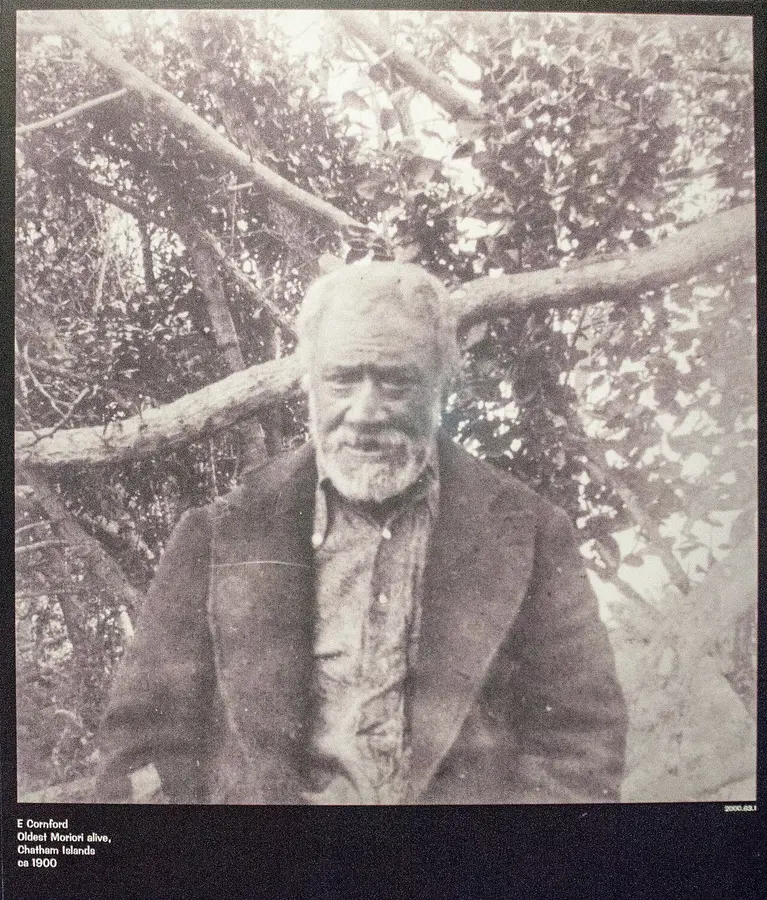
Ngāti Mutunga and Ngāti Tama sailed to the Chathams and took the islands. The Moriori, holding to their covenant of peace, chose not to resist and were nearly destroyed.
Rēkohu (Chatham Island) and Rangihaute (Pitt Island) lie 767 kilometres south-east of the mainland, and Moriori are their indigenous people. They are Polynesian, of the same ancestry as Māori, and current research dates their arrival to the 1400s. Their way of life rested on Nunuku's Law. After fighting among the early tribes, the chief Nunuku-whenua forbade killing and cannibalism, and the covenant held for centuries. The population grew to about 2,000 at most, in nine tribes. Outside contact began in 1791 with the British ship Chatham, and sealers arrived soon after 1800. The diseases they carried cut Moriori numbers to under 1,700 by 1835. Some sealing crews included Māori, and through them news of the islands reached the mainland.
The Taranaki iwi Ngāti Mutunga and Ngāti Tama had moved south to the Wellington area in the 1820s, partly to escape Waikato war parties armed with muskets. By 1835 they felt insecure again. Ngāti Raukawa had come to the Kāpiti coast, and relations with Ngāti Toa had broken down after the battle of Haowhenua in 1834. Te Ara also records quarrels over the spoils of earlier fighting. Men who had visited the Chathams described a land of plentiful food whose people did not fight. At a meeting on Matiu (Somes Island), Ngāti Mutunga gave up their claims around Wellington Harbour in favour of Te Āti Awa and other chiefs from Taranaki. In November 1835 the two iwi took over the Rodney, a trading vessel from Sydney, which made two crossings. The first carried about 470 people, crowded and short of food and water; the second, arriving on 5 December, brought about 430 more. Moriori fed the newcomers and nursed the sick.
The arrivals then walked the land to claim it. About a thousand Moriori men met in council at Te Awapātiki. Younger men wanted to resist, since Moriori were twice as numerous. The elders Tapata and Torea replied that Nunuku's Law was a covenant with the gods that could not be set aside, and the council kept to it. The newcomers read the gathering as a possible prelude to war, and Moriori were attacked when they returned to their villages. Around 300 were killed, by Māori accounts about one sixth of the people; the rest were enslaved. One of the invading chiefs, Te Rakatau Katihe, later said it was done "in accordance with our custom". Moriori later said with pride that no Māori had died at Moriori hands. Lists kept by Moriori elders record 1,561 deaths between 1835 and 1863, from killing, introduced disease and kongenge, a deep despair. By 1862 only 101 Moriori were left.
Rēkohu was annexed in 1842, yet the Crown did nothing to ease Moriori enslavement until the late 1850s. Moriori petitioned repeatedly, and in 1863 the resident magistrate proclaimed them free. The Native Land Court sat at Waitangi for eight days in June 1870. It gave weight to conquest before 1840 and gave Ngāti Mutunga over 97% of the land, leaving Moriori under 3%, though most Māori had by then gone back to Taranaki. Early 20th-century ethnographers wrongly described Moriori as an extinct people inferior to Māori, and the Crown's School Journal taught generations of children that they had lived in New Zealand before Māori; the Crown now acknowledges spreading this myth. A 1980 documentary began a Moriori revival. The Waitangi Tribunal heard their claim from 1994 and found in their favour in 2001. Moriori, represented in negotiations by the Hokotehi Moriori Trust, signed a deed of settlement in February 2020, including a Crown apology, land on Rēkohu and $18 million, and Parliament enacted it in November 2021.
The defining moments of New Zealand, on one poster. Get your digital print for $25
Regions affected
Sources
Written for this project from these references rather than copied from them. Follow a link to read the full account, or to check this one against the original.
Related
The Harriet affair
A trading ship wrecked near Cape Egmont and its survivors were attacked. The rescue that followed brought British soldiers into combat in New Zealand for the first time.
Te Namu, ŌpunakeThe Elizabeth affair
A British captain hid Te Rauparaha’s war party aboard his brig to capture the Ngāi Tahu chief Te Maiharanui — an affair that strengthened calls for an official British presence.
Akaroa HarbourThe Wairau affray
An armed Nelson party tried to arrest Te Rauparaha over disputed Wairau land. Twenty-two settlers and at least four Ngāti Toa died.
TuamarinaThe Northern War
Ngā Pakanga i te Tai Tokerau
Hōne Heke and his supporters felled the British flagstaff at Kororāreka four times, the last during the attack in which he and Kawiti sacked the town. Ngāpuhi fought on both sides. The war ended at Ruapekapeka, an engineered pā built to absorb artillery.
Kororāreka and Ruapekapeka